

Five Paths, A Bigger Picture
Purchase the book

EXPLORE THE KEY THEMES
Five Paths, A Bigger Picture
Each part of the journey offers a piece of the puzzle-- from unexpected observations in foals to broader insights about birth and the power of early care.
The Mystery of the Dummy Foal
A baffling medical puzzle where a foal is born looking perfectly healthy but behaves as if it is completely detached from reality.
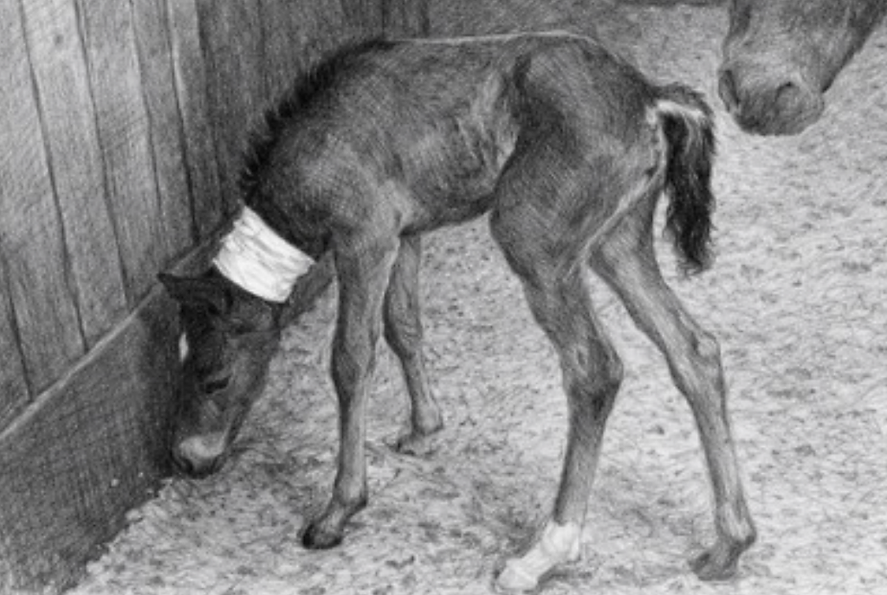
The dummy foal is born looking perfectly healthy but behaves as if it is completely detached from reality.
For decades, the condition—medically known as Neonatal Maladjustment Syndrome (NMS)—was a mystery because of a series of contradictions:
-
The Behavioral Puzzle: Affected foals show no interest in nursing, do not recognize their mothers, wander aimlessly into walls, and exhibit signs of severe neurological detachment.
-
The False Assumption: For over a century, veterinarians assumed this behavior was caused by hypoxia (brain damage from a lack of oxygen during a difficult birth). However, many "dummy foals" were born after completely normal, easy births, which contradicted the brain damage theory.
-
The Breakthrough Discovery: The true mystery was solved when Dr. Madigan and his Equine Comparative Neurology team at UC Davis discovered the foals weren't brain-damaged at all—they were simply retaining the brain chemistry of life in the womb. Read about the entire discovery in Awakening at birth.
Birth Is More Than Delivery - it is a Biological Awakening

Before birth, the fetus exists in a protected, sleep-like state. Neuroactive steroids help quiet brain activity, suppress movement, and maintain the conditions needed for life within the uterus. At birth, an extraordinary transition must occur. The newborn must begin breathing independently, regulate body temperature, seek nourishment, recognize its mother, and engage with the outside world. These changes require a rapid and coordinated shift in brain function, hormones, circulation, and behavior.
Research in newborn foals suggests that the physical and biological events surrounding birth help initiate this transition. When those signals are missed or disrupted, a newborn may remain partly influenced by the inhibited state of fetal life. This amazing phenomenon isn't limited to foals. Livestock, and yes, even infants, may hang on to the hormones in the womb following birth.
Awakening at Birth follows the scientific journey that began with these foals and asks a larger question: What can they teach us about how newborn animals—and perhaps human infants—awaken at birth?
From the Foaling Stall to Human Neonatal Research
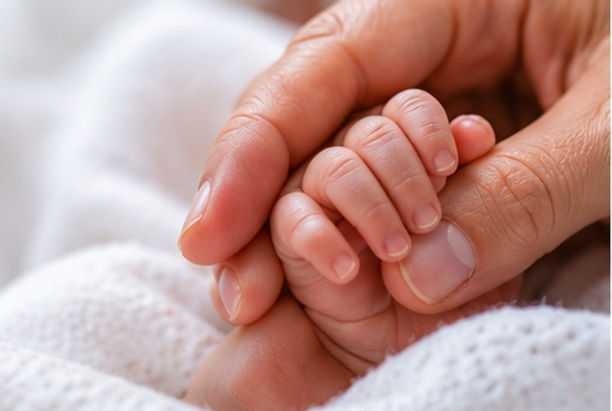
The foal discoveries opened a larger scientific question: How do birth-related signals, brain neurosteroids, delivery conditions, and early maternal contact contribute to the newborn’s transition from fetal life?
In collaboration with researchers at Stanford University studying human infants, Dr. Madigan’s team explored neuroactive steroid changes following vaginal and cesarean birth and the possible influence of early skin-to-skin contact.
Kangaroo Mother Care
The procedure that helps awaken the dummy foal now used worldwide- the Madigan Squeeze- may have informed on the mechanisms and benefits of infants receiving Kangaroo Mother Care or skin to skins swaddling. Research reveals early closed contact between mother and baby may play a vital role in both improved survival and healthy brain development.

Immediate Kangaroo Mother Care (KMC)—continuous skin-to-skin contact—has been shown to improve survival in low-birth-weight infants and to yield measurable long-term social, behavioral, and neurodevelopmental benefits
From a biological perspective, KMC provides:
-
sustained tactile contact
-
thermal regulation
-
rhythmic sensory input
-
maternal heartbeat and breathing cues
-
olfactory and auditory signals
-
autonomic stabilization
These are precisely the kinds of sensory and physiological inputs mammals have experienced since birth throughout evolutionary history.
This raises another important question:
In Awakening at Birth, we ask the question: Could postnatal sensory regulation and maternal contact influence how the newborn brain transitions from fetal neurobiology to postnatal function?